
In Colombia, breakfast is rarely a quick granola bar or a sad bowl of cereal. It is a substantial, often warm, and deeply satisfying meal designed to fuel you through a busy day of exploring. From the high Andes to the sunny coast, regional differences shine through in the morning, you’ll find everything from warm soups to savory corn cakes and rich cheeses.
Breakfast here is more than just food; it’s a daily ritual, a moment to gather, and a core part of the morning routine. Skipping it? Not an option.
Next up, we dive into our official ranking of the Top 5 Colombian Breakfasts that define the start of the day!
1. Calentado
If there is a dish that defines the resourcefulness and comfort of Colombian home cooking, it is the Calentado. The name literally translates to “heated up,” but don’t let the simplicity fool you, this is a delicious and hugely popular way to start the day, particularly in the Andean regions (like Antioquia and the Coffee Axis).
What is the Calentado?
The Calentado is the ultimate breakfast of champions, built entirely on leftovers from the previous night’s dinner. Think of it as a beautiful culinary recycling project. The foundation is always a mix of two key components, reheated and often fried until slightly crispy:
- Rice: Leftover white rice.
- Beans: Hearty frijoles (red beans, often stewed with pork rind).
Completing the Plate
A true Calentado isn’t complete without its supporting cast, turning a simple bowl of rice and beans into a mega-meal:
- Protein: Usually includes grilled steak (carne asada) or scrambled eggs.
- Arepa: A small, grilled corn cake for soaking up the juices.
- The Crown: Often topped with a fried egg (the quintessential Colombian breakfast addition) and a slice of avocado.
The Calentado is inexpensive, filling, and incredibly comforting, it’s the perfect, hearty dose of fuel you need before exploring a Colombian city!
2. Caldo de costilla
For those unfamiliar with the tradition, eating soup for breakfast might sound strange, but in the chilly mountain mornings of Bogotá and the high Andes, the Caldo de Costilla (Rib Soup) is the traditional go-to. This is a restorative, intensely savory bowl that instantly wakes you up.
Why Soup for Breakfast?
Colombian mornings can be quite cool, and Caldo de Costilla serves as the perfect internal heater. It’s also famously known as the best way to recover from a night out, it’s the ultimate Colombian “remedy” soup!
- The Broth: A clear, flavorful broth made from slow-simmering beef ribs (costillas).
- The Staples: The soup is loaded with soft, buttery pieces of potato (papa sabanera or pastusa) and yuca (cassava).
- The Finish: It is always served steaming hot, sprinkled with fresh cilantro (cilantro fresco), and often accompanied by a side of arepa and ají (a mild, fresh chili sauce) for dipping.
It’s simple, light yet satisfying, and a taste of pure Colombian home cooking. Don’t leave Bogotá without trying a bowl!
3. Arepa con queso y huevos pericos
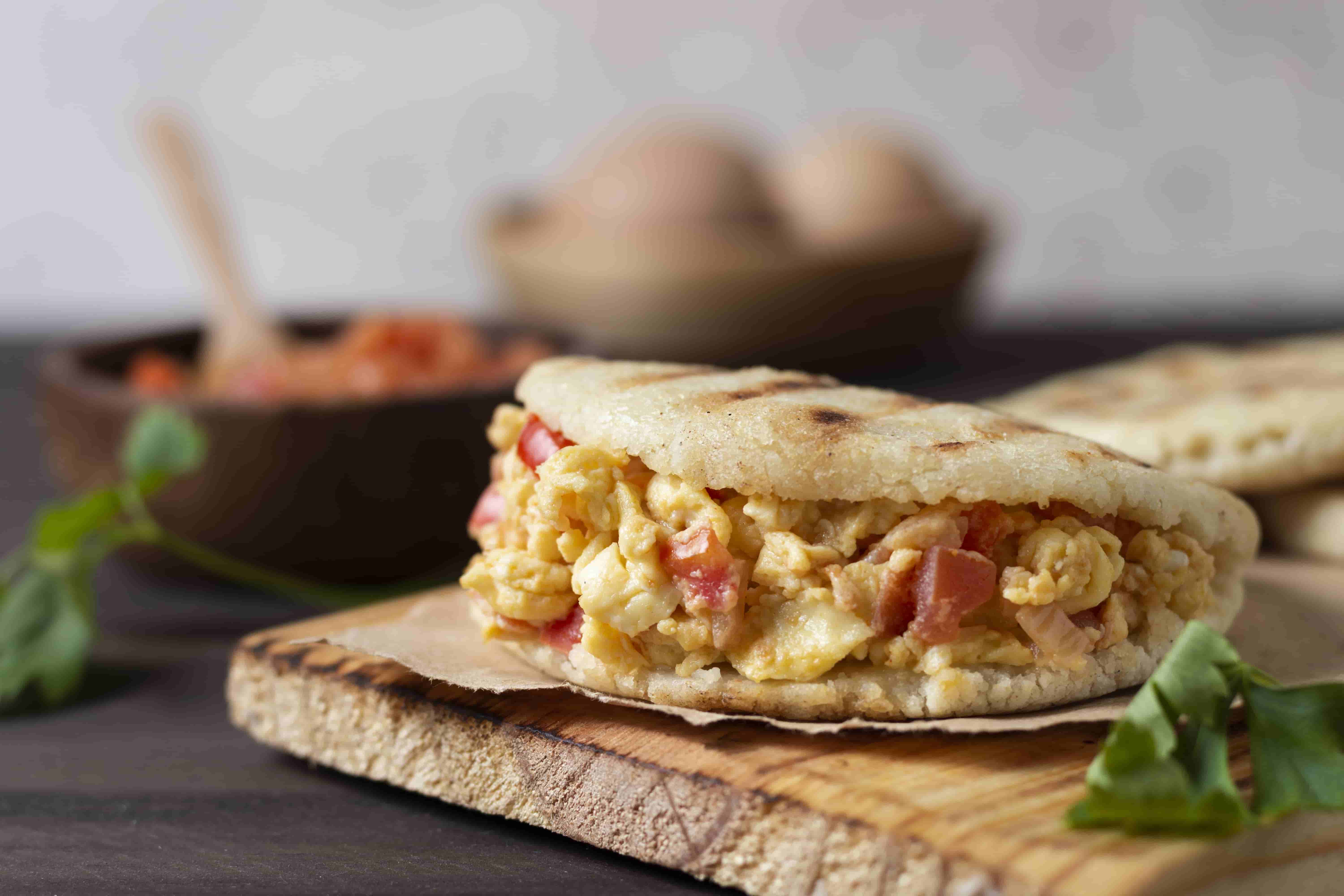
If there’s one breakfast plate that defines the daily routine across much of Colombia, it’s the trio of Arepa, Cheese, and Huevos Pericos. This combination is reliable, easy to find, and hits all the right savory notes.
Dissecting the Perfect Plate
This plate offers a perfect balance of corn, dairy, and egg—the fundamentals of a Colombian desayuno:
- The Arepa (Base): While arepas come in endless varieties, for this combo, you typically get a simple, thick, grilled white corn arepa, often buttered and occasionally stuffed with mild white cheese.
- The Cheese: A side or filling of fresh, salty, often melting cheese (queso fresco or queso costeño) adds the necessary creamy contrast.
- Huevos Pericos (The Star): These are not your average scrambled eggs. Pericos (literally “parrots,” thanks to their bright colors) are soft scrambled eggs cooked with finely chopped tomatoes (tomate) and scallions (cebolla larga). The addition of the vegetables elevates the flavor, making them moist and savory.
This is the dependable, hearty meal you’ll find in every small-town cafe and bustling city breakfast spot.
4. Tamal
The Tamal might seem like a heavy lunch item, but in many regions, particularly Tolima, Cundinamarca, and the Andean center, it is a cherished and substantial breakfast staple, especially on weekends or special occasions. Eating a tamal for breakfast is a deep dive into regional flavor.
Unwrapping the Flavor
The tamal is a labor of love, requiring hours of preparation and slow steaming:
- The Wrapper: It is a mixture of corn dough (masa) and flavorings, all wrapped and tightly secured in a plantain or banana leaf.
- The Filling: Inside, you find a moist, seasoned corn dough stuffed with generous chunks of different meats (often pork belly, chicken, and sometimes beef), along with vegetables like carrots, peas, and potatoes.
- The Steam: The entire package is then slowly steamed, allowing the meat and seasonings to completely permeate the corn dough, resulting in a unique, rich flavor.
When served for breakfast, the tamal is usually accompanied by a warm cup of hot chocolate or coffee, making for an incredibly dense and satisfying morning meal.
5. Arepa de huevo
We complete our Top 5 by heading to the sun-drenched Colombian Caribbean Coast for the beloved Arepa de Huevo. This fried delicacy is a street-food icon and a breakfast treat that is unlike any other arepa in the country.
A Pocket of Perfect Crunch
The Arepa de Huevo is a marvel of Colombian street-food engineering. It takes the simple corn cake and turns it into a deep-fried, delicious pocket:
- First Fry: A thick corn arepa is partially deep-fried to puff it up.
- The Stuffing: The cook then carefully slits the arepa open, cracks a raw egg inside the pocket, and seals it.
- Second Fry: The arepa is returned to the hot oil until the dough is golden brown and crispy, and the egg inside is perfectly cooked (usually soft-to-medium yolk).
The result is a warm, savory, crispy corn pocket with a perfectly cooked egg inside—it’s an entire breakfast self-contained and ready to eat with your hands. It is typically enjoyed with a dash of suero costeño (a tangy, thick coastal sour cream) or a spritz of lime.
A visit to Cartagena or Barranquilla is incomplete without this essential coastal breakfast treat!
Leave a Reply