
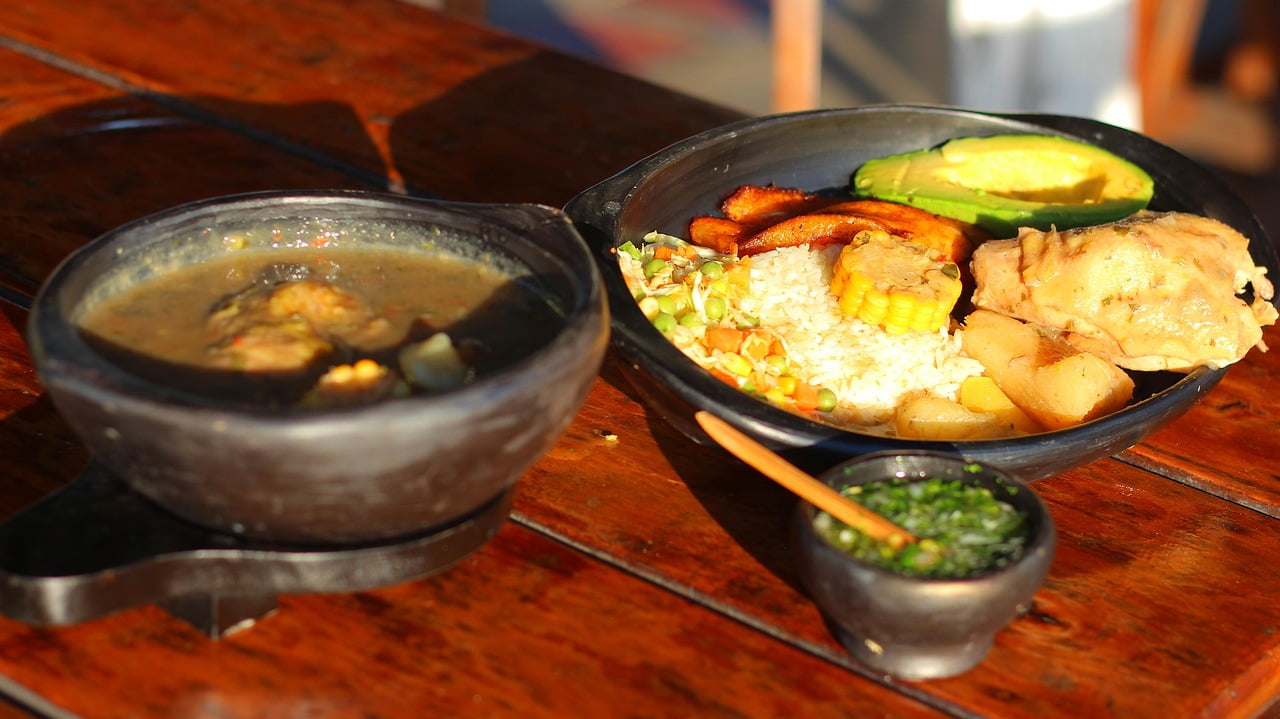
In many parts of the world, lunch is a sad sandwich eaten over a keyboard. In Colombia, that is practically a sin. Here, lunch is the undisputed king of the day. Around noon, the streets fill with the aroma of toasted corn, simmering broths, and frying plantains. But it’s about more than just the food; it’s about the culture of the “corrientazo” (the popular daily special) and the “sobremesa” (the art of lingering at the table to talk long after the food is gone).
Colombian lunch culture is built on the foundation of the “complete meal”: you almost always start with a hot soup, followed by a “seco” (the main plate with rice, meat, and salad), and finished with a fresh fruit juice. It’s a moment of pause, a family gathering, and a display of the country’s immense biodiversity. From the steaming jungles of the Amazon to the high-altitude peaks of the Andes, let’s explore the 10 most iconic lunches that define this beautiful country.
1. Bandeja Paisa: The Mountain Feast
Hailing from the “Paisa” region (Antioquia and the Coffee Axis), this dish is less of a meal and more of a challenge. It was originally designed to fuel farmers for 12-hour days in the steep mountains.
It features red beans (usually cooked with pork hoof for flavor), white rice, ground beef, a thick slab of chicharrón (crispy pork belly), chorizo, a fried egg, sweet plantains (tajadas), a slice of avocado, and a small white arepa.
- Why it’s a legend: It represents the abundance of the land. It’s a point of pride for Colombians and the first thing any tourist looks for.
- Fun Fact: A traditional Bandeja Paisa can contain between 2,000 and 2,500 calories. That is an entire day’s worth of energy in a single sitting!
2. Ajiaco Santafereño: The Andean Warmth
This is the pride of Bogotá. It’s a sophisticated, thick chicken and potato soup that reflects the cool, misty climate of the capital.
It uses three types of potatoes: Sabanera (which stays firm), Pastusa (which adds color), and Criolla (which dissolves to thicken the soup). It includes corn on the cob, shredded chicken, and the essential Guascas herb. It’s served with a side of heavy cream and capers to mix in.
- Why it’s a legend: It’s a masterclass in texture. The contrast of the salty capers with the creamy soup is unforgettable.
- Fun Fact: There is an old legend that the name “Ajiaco” comes from a Chibcha cacique named Aji and his wife Aco, though linguists say it more likely comes from the word “ají” (hot pepper), even though the modern version isn’t spicy!
3. Sancocho: The Sunday Soul
Sancocho is the ultimate family dish. It’s usually prepared in a massive pot to feed dozens of relatives during weekend gatherings.
It’s a heavy, rustic soup made with large chunks of yuca (cassava), green plantains, potatoes, and corn. The “Trifásico” version includes three meats: chicken, beef, and pork ribs. It’s always served with a side of rice and avocado.
- Why it’s a legend: It’s the centerpiece of the “Paseo de Olla” (the Pot Trip), where families go to a river, build a fire with wood, and cook the soup right on the bank.
- Fun Fact: Many Colombians swear that the best Sancocho is the one eaten the next day, as the flavors settle and the broth becomes even thicker.
4. Lechona Tolimense: The Celebration Roast
Originally from the Tolima department, this dish is a masterpiece of slow-roasting that takes up to 12 hours to prepare.
A whole pig is deboned and stuffed with a mixture of pork meat, yellow peas, onions, and a secret blend of spices. The pig is then roasted in a brick oven until the skin becomes a dark, glass-like “cracker.”
- Why it’s a legend: It’s the go-to meal for weddings, Christmas, and large festivals. You haven’t lived until you’ve tried a piece of the crispy “cuero” (skin).
- Fun Fact: In Tolima, people get very offended if you add rice to Lechona. While the Bogotá version uses rice as a filler, the original Tolima recipe is strictly peas and meat!
5. Mojarra Frita with Arroz con Coco: The Caribbean Spirit
If you are sitting on a beach in Cartagena or Santa Marta, this is what you are eating. It’s the flavor of the Atlantic coast.
A whole Mojarra or Red Snapper is seasoned and deep-fried until the fins are crunchy like chips. It’s served with Arroz con Coco (coconut rice), patacones (smashed fried plantains), and a fresh lime salad.
- Why it’s a legend: It perfectly balances the saltiness of the sea with the sweetness of the coconut rice.
- Fun Fact: The “Arroz con Coco” involves a process where the coconut milk is fried until it separates into oil and sweet brown bits called “titoté.” That’s where the dark color and rich flavor come from.
6. Cazuela de Mariscos: The Bounty of Two Oceans
Colombia is the only country in South America with coasts on both the Atlantic and Pacific, and this dish celebrates that geographic luck.
A creamy, thick stew made with shrimp, calamari, octopus, clams, and fish. It’s often finished with coconut milk, heavy cream, and sometimes a touch of brandy or white wine for depth.
- Why it’s a legend: It’s considered a “gourmet” lunch, often reserved for vacations or special dates at seafood restaurants.
- Fun Fact: In Colombian coastal culture, the Cazuela de Mariscos is often jokingly referred to as an “aphrodisiac” or a “rompe colchón” (mattress breaker) due to its high phosphorus and protein content.
7. Mondongo: The Hearty Tradition
This soup is a staple in the Antioquia region. While “tripe soup” might sound intimidating to some, in Colombia, it’s a delicacy.
Slow-cooked tripe (beef stomach) diced into tiny cubes, mixed with pork meat, potatoes, carrots, and peas. The broth is thick and yellow, seasoned with cilantro and onions.
- Why it’s a legend: It’s the ultimate “recovery” food. It’s incredibly filling and has a unique, chewy texture that locals crave.
- Fun Fact: It is traditional to serve Mondongo with a side of white rice, avocado, and, most importantly, a sweet banana. Many people mash the banana directly into the salty soup for a sweet-and-savory combo!
8. Carne a la Llanera (Mamona): The Cowboy BBQ
From the vast “Llanos” (plains), this is Colombia’s answer to the Argentine Asado or American BBQ.
Huge cuts of veal are skewered on long wooden poles and arranged in a circle around a slow-burning wood fire. The meat is seasoned only with salt and beer to let the natural flavor shine.
- Why it’s a legend: It represents the “vaquero” (cowboy) lifestyle. It’s meant to be eaten with your hands, accompanied by boiled yuca and plantain.
- Fun Fact: It’s called “Mamona” because the meat comes from a young calf that is still nursing (mamando). This ensures the meat is incredibly tender and lean.
9. Mote de Queso: The Hidden Gem
This soup from the Sucre and Córdoba departments is a vegetarian-friendly masterpiece that most tourists unfortunately miss.
A thick, creamy soup made from ñame (a tropical yam) that dissolves into the broth. It’s loaded with chunks of “Queso Costeño” (a salty, hard white cheese) and topped with a “refrito” of onions and garlic.
- Why it’s a legend: It has a sour, salty, and creamy profile that is unlike any other soup in the world. It’s pure comfort in a bowl.
- Fun Fact: The secret to a perfect Mote is adding a splash of Suero Costeño (a fermented cream similar to sour cream) right before serving to give it that signature tang.
10. Arroz con Pollo: The Taste of Home
You won’t find a single Colombian who didn’t grow up eating this. It’s the quintessential birthday and party meal.
Rice cooked in chicken broth and seasoned with “hogao” (tomato and onion sauce), mixed with shredded chicken, peas, carrots, and diced peppers. It’s usually served with a side of French fries and a dollop of ketchup.
- Why it’s a legend: It’s the ultimate “mom’s cooking” dish. It’s simple, colorful, and carries a lot of nostalgia.
- Fun Fact: The best part of the Arroz con Pollo for many is the “Pega”—the layer of slightly burnt, crispy rice that sticks to the bottom of the pot. In many households, there’s a fight over who gets to scrape it off!
As you can see, Colombian lunches are a vibrant tapestry of history and geography. Whether you’re digging into a mountain of protein in Medellín or sipping a creamy cheese soup on the coast, you are participating in a tradition that values slow cooking and communal eating.
Colombian food doesn’t rely on complex techniques or expensive spices; it relies on the freshness of the earth and the heat of the fire. So, the next time you find yourself in Colombia, skip the fast food. Sit down, order a “jugo natural,” wait for your soup to arrive, and enjoy the best hour of the day.
Leave a Reply